Mama Elena and José Treviño's Relationship
Like Water for ChocolateMama Elena and Jose Trevino’s relationship was a lasting, secret love whose consequences reached beyond their separation: it shaped Mama Elena’s life, revealed Gertrudis’s parentage, and gave Tita a new understanding of her mother. A packet of letters preserved in a locked box carried the history from one generation to the next, first as a concealed past and later as evidence that could protect Gertrudis’s marriage.
Love Opposed by Family Authority
Mama Elena and Jose Trevino fell in love when they were young. Her parents opposed the relationship because Jose had Black ancestry, and they forced her into an immediate marriage with Tita’s father. The intervention prevented the couple from marrying, but it did not end their attachment: Mama Elena continued corresponding secretly with Jose after her marriage.
The letters also disclosed that the relationship had consequences beyond correspondence. Gertrudis was Jose’s daughter, not the daughter of Mama Elena’s husband. The family’s effort to control Mama Elena’s marriage therefore concealed a second family history: Gertrudis’s parentage had been kept secret along with the love that preceded it.
Separation and Loss
When she discovered she was pregnant, Mama Elena planned to escape with Jose. She waited for him in the darkness of a balcony, but an unknown man appeared and attacked him. Jose died, and Mama Elena, bereaved, resigned herself to life with her husband. The account gives no explanation for the attacker’s actions, leaving the couple’s separation marked by a sudden, unresolved violence rather than a freely chosen end to their relationship.
Mama Elena’s husband did not learn the full story until Tita’s birth. He heard the news from someone at a bar where he had gone to celebrate his new daughter, and the shock brought on a fatal heart attack. In this way, the secret affected the next generation even before Tita knew it existed: the circumstances surrounding her birth included the concealed history of her mother’s love and the revelation that ended her father’s life.
The Letters and Tita’s Discovery
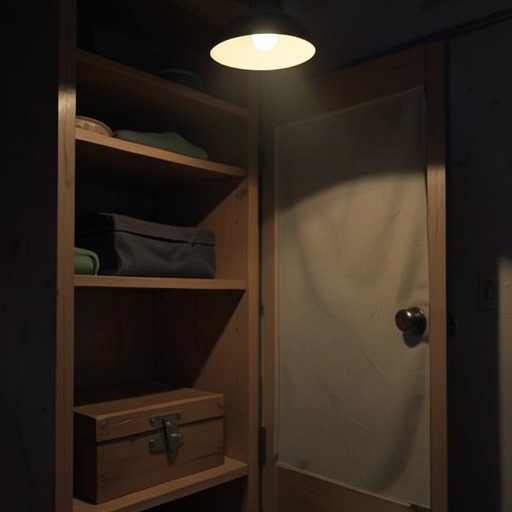
Tita uncovered the relationship only after Mama Elena’s death. As she prepared her mother for the wake, she removed the large keyring Mama Elena had worn for as long as Tita could remember. The house had been tightly controlled, and the keys opened its locked rooms and storage places. A small key in a heart-shaped locket led Tita to a box she remembered from childhood, when she had found it in her mother’s wardrobe while playing hide-and-seek.
As a child, Tita had been punished by having to remove the kernels from a hundred ears of corn after trying to open the box. Reading its diary and letters, she understood that the punishment had been for attempting to discover what Mama Elena kept hidden. She arranged the letters by date and learned the history of the relationship, including the opposition to the marriage, the secret correspondence, Jose’s death, and Gertrudis’s parentage.
Tita considered burning the letters but put them back as she had found them. Her hesitation preserved the evidence that would later matter to Gertrudis. At the wake, Tita looked at her mother with recognition rather than sorrow: she could now see a person who had lived through a frustrated love, not only the mother who had controlled and repressed her. At the funeral she wept for that lost life and promised herself she would not renounce love. She believed John Brown was her true love, but seeing Pedro arrive with Rosaura left her less certain.
Disclosure and Inherited Consequences
The secret eventually became necessary to disclose. A year after Gertrudis returned, she gave birth to a child of mixed ancestry. Juan was furious and threatened to leave her, unable to forgive what he understood as her return to her former ways. Tita told the couple what she had learned from the letters. Mama Elena’s history then served as proof of Gertrudis’s innocence, and the couple stayed together, though the revelation was difficult for Juan to accept.
The family history remained visible in the next generation. At the later celebration, Gertrudis arrived with Juan and their eldest child, whose dark skin and clear blue eyes reflected the ancestry the letters had brought to light. What had begun as a relationship hidden under family pressure thus persisted in both private knowledge and public appearance. For Tita, preserving and eventually disclosing the letters also transformed a discovery that had once felt like a violation into a means of understanding her mother and defending her sister.